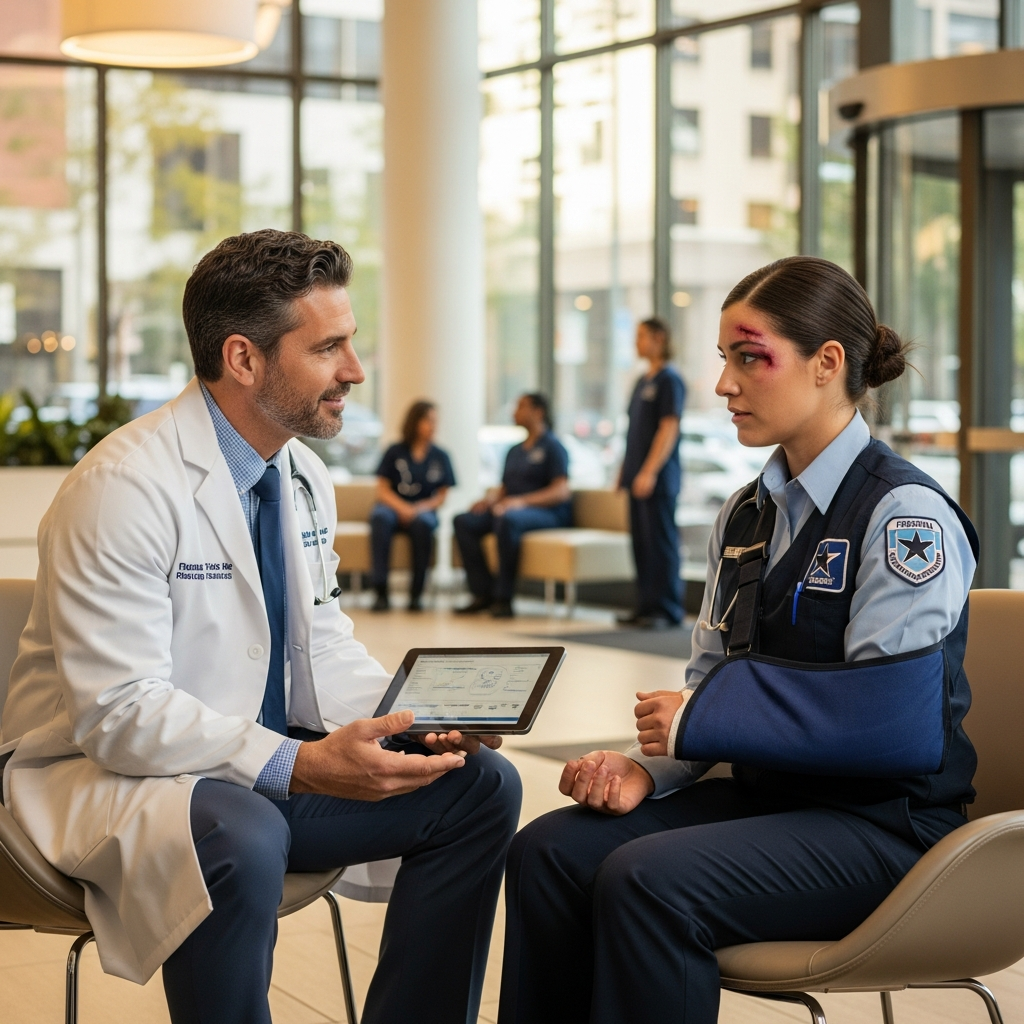
Columbus DOL Doctors: What to Expect at Your Appointment

You know that feeling when you’re sitting in a doctor’s waiting room, thumbing through a magazine from 2019, and your mind starts racing? Your palms are a little sweaty, you’re second-guessing what you’re going to say, and part of you is wondering if you should’ve just stayed home and pretended everything was fine.
Now imagine that anxiety cranked up to eleven because you’re not just dealing with a regular checkup – you’re about to see a DOL doctor in Columbus for what might be the most important medical appointment of your career.
*Deep breath.*
Whether you’re here because of a workplace injury that’s been nagging at you for weeks, or you’ve been dealing with pain that’s making it impossible to do your job the way you used to… this appointment feels huge. And honestly? It kind of is.
Here’s the thing about Department of Labor medical evaluations – they’re not your typical doctor visits. Sure, there’s still the standard blood pressure cuff and “how are you feeling today?” pleasantries, but underneath all that is something much more significant. This doctor’s assessment could determine whether you get the workers’ compensation benefits you need, how long you might be off work, or what accommodations your employer needs to make.
No pressure, right?
I’ve talked to countless people who’ve walked into these appointments feeling completely unprepared. They thought it would be just like seeing their family doctor – you know, quick chat about symptoms, maybe a prescription, see you in six months. But DOL evaluations are… different. They’re more thorough, more detailed, and frankly, they matter in ways that can affect your paycheck, your job security, and your entire family’s financial stability.
That’s exactly why you need to know what you’re walking into.
The good news? Once you understand the process – what these doctors are looking for, how the evaluation actually works, what questions they’ll ask – that knot in your stomach starts to loosen up a bit. Knowledge really is power here, especially when you’re dealing with something that feels so out of your control.
Think of it like this: if you were going to buy a house, you wouldn’t just show up and wing it, right? You’d research the neighborhood, understand the buying process, maybe even drive by a few times. This appointment deserves the same kind of preparation, because the stakes are just as high.
Over the years, I’ve seen people walk out of these evaluations feeling frustrated because they didn’t know what to expect. They forgot to mention important details about their injury, couldn’t explain how their condition affects their daily work, or simply felt too intimidated to advocate for themselves properly. And that’s heartbreaking, because these are good people dealing with real pain who just needed someone to explain the process beforehand.
Here’s what I wish someone had told me when I first started learning about DOL evaluations: these doctors aren’t trying to trip you up or catch you in some kind of lie. They’re medical professionals doing their job, which is to provide an objective assessment of your condition and how it impacts your ability to work. But – and this is important – they can only work with the information you give them.
So what exactly happens during one of these appointments? How long do they take? What kinds of tests might they run? Should you bring medical records, or will they already have everything they need? And perhaps most importantly – how can you make sure you’re presenting your case in the clearest, most compelling way possible?
That’s exactly what we’re going to walk through together. We’ll cover everything from the moment you check in at the front desk to what happens after the doctor submits their report. I’ll share what questions you should be ready to answer, what red flags to avoid, and how to explain your limitations without underselling or overselling your condition.
Because here’s the truth: you deserve to have your voice heard in this process. Your pain is real, your limitations are valid, and you have every right to benefits that help you get back on your feet – whether that means returning to work or finding a new path forward.
Let’s make sure you’re ready.
What DOL Actually Stands For (And Why It Matters)
DOL – Doctor of Osteopathic Medicine – sounds fancy, doesn’t it? But here’s the thing that trips people up: these aren’t “alternative” doctors or some kind of specialty practice. They’re fully licensed physicians who went through medical school, residency, the whole nine yards.
Think of it like this… if MDs are like classical musicians who learned to play beautifully from sheet music, DOs are jazz musicians who learned the same music but also know how to improvise. Both can perform surgery, prescribe medications, and treat everything from broken bones to heart disease. The difference? DOs get additional training in something called osteopathic manipulative treatment – basically, they learn to use their hands as diagnostic and healing tools.
In Columbus, you’ll find DO doctors in every specialty imaginable. Emergency rooms, cardiology practices, family medicine clinics… they’re everywhere, and honestly, many patients don’t even realize their doctor has “DO” after their name instead of “MD.”
The Hands-On Philosophy That Changes Everything
Here’s where things get interesting (and maybe a little confusing at first). DO doctors are trained to see your body as one interconnected system rather than a collection of separate parts. It’s like… imagine your body is a really complex machine, and while an MD might focus on fixing the specific gear that’s broken, a DO is also thinking about how that broken gear affects the whole machine.
This whole-body approach means your Columbus DO might ask questions that seem totally unrelated to why you came in. Seeing them for back pain? Don’t be surprised if they ask about your stress levels, how you sleep, or even about old injuries you’d forgotten about.
Actually, that reminds me of a patient who came in for chronic headaches and ended up discovering the real culprit was tension she’d been carrying in her shoulders from a car accident years earlier. Sometimes the obvious answer isn’t the right answer.
What That Extra Training Really Means
Those additional 200+ hours of hands-on training DOs receive aren’t just for show. They learn to feel things with their hands that you can’t see on an X-ray or blood test. Muscle tension patterns, subtle restrictions in movement, areas where your body is compensating for old injuries…
But here’s what’s counterintuitive – not every DO uses these manual techniques regularly. Some focus more on the philosophy behind osteopathic medicine (that whole-person approach) rather than the hands-on manipulation. It’s perfectly normal to see a DO who treats you very similarly to how an MD would, just with maybe a few more questions about your lifestyle and stress levels.
The Evidence-Based Reality
Let’s be real for a minute – when people hear “hands-on healing,” sometimes they picture crystals and essential oils. That’s not what we’re talking about here. Osteopathic manipulative treatment has actual research behind it, especially for things like lower back pain, certain types of headaches, and some musculoskeletal issues.
It’s not magic, and it’s not a cure-all. Your Columbus DO isn’t going to manipulate away your diabetes or high blood pressure. But for certain conditions – particularly those involving muscles, joints, and pain – the combination of traditional medicine plus manual therapy can be pretty effective.
Integration with Traditional Medicine
This is probably the most important thing to understand: DO doctors aren’t replacing traditional medicine, they’re expanding it. Your appointment might include a prescription for medication AND some manual therapy. You might get referred for an MRI AND receive treatment that addresses how your body has been compensating for the problem.
In Columbus specifically, many DO doctors work in integrated practices where they collaborate closely with MDs, physical therapists, and other specialists. It’s not an either/or situation – it’s more like having extra tools in the toolkit.
Setting Realistic Expectations
Look, I’m not going to sugarcoat this – osteopathic treatment isn’t always immediately life-changing. Sometimes you’ll feel better right after a session, sometimes it takes several appointments to notice a difference, and sometimes (let’s be honest) it doesn’t help much at all.
But what many patients find valuable is the approach itself. Having a doctor who spends time really listening, who considers how different parts of your health connect to each other, who’s willing to try different approaches… that can be pretty refreshing in our rush-rush healthcare system.
The key is going in with realistic expectations and an open mind, while still advocating for the care you need.
What to Bring – Your Appointment Survival Kit
Here’s what most people don’t tell you: showing up prepared can literally save you hours of follow-up calls and rescheduled visits. I’ve seen too many patients walk out frustrated because they forgot one crucial document.
First, bring every single medication bottle you currently take – yes, even that random supplement your neighbor swore by. Don’t just write them down; bring the actual containers. DOL doctors need to see dosages, prescribing physicians, and pharmacy information. That little detail about who prescribed what? It matters more than you’d think.
Your insurance card is obvious, but here’s the kicker – bring a backup form of ID too. Sometimes insurance systems go down (because technology loves to fail at the worst moments), and having a driver’s license can keep your appointment on track.
The Real Questions They’ll Ask
You know how you practice conversations in your head before important meetings? Do that here. DOL doctors follow specific protocols, and being ready for their questions makes everything smoother.
They’ll want to know about your work injury in excruciating detail. Not just “I hurt my back lifting something” – they need the when, where, how, and what happened next. Think: “On March 15th, around 2 PM, I was lifting a 40-pound box from the warehouse floor to a shelf about chest height when I felt a sharp pain shoot down my left leg.”
Actually, that reminds me… they’ll also ask about your pain levels throughout a typical day. The 1-10 scale isn’t just a formality – be honest about how you feel when you wake up, during activities, and at bedtime. Don’t downplay your pain because you think it makes you look tough. It doesn’t – it just makes treatment harder.
The Physical Exam – No Surprises Here
DOL doctors are thorough. Really thorough. They’re not trying to catch you in a lie; they’re building a complete picture of your condition for legal and medical purposes.
Wear clothes you can move in easily – loose pants, slip-on shoes if your injury involves bending over. If they need to examine your shoulder, you don’t want to be wrestling with a complicated sweater while dealing with pain.
They’ll test your range of motion, strength, and reflexes. Some tests might be uncomfortable, and that’s… well, that’s kind of the point. They need to document your limitations accurately. If something hurts during the exam, speak up immediately. Don’t try to push through it.
Speaking Your Doctor’s Language
Here’s something that’ll make your appointment infinitely more productive: learn to describe your symptoms in medical terms. Instead of “it kills,” try “sharp, stabbing pain” or “constant aching.” Instead of “my arm doesn’t work right,” say “I have weakness and limited range of motion in my shoulder.”
This isn’t about impressing anyone – it’s about getting your point across clearly. When you use precise language, doctors can document your condition more accurately, which directly impacts your claim.
And please, for the love of all that’s holy, don’t exaggerate. DOL doctors have seen everything, and they’re trained to spot inconsistencies. Stick to the facts about how your injury affects your daily life.
After the Appointment – Your Next Moves
Don’t just walk out and hope for the best. Before you leave, ask directly: “When should I expect to hear about next steps?” and “What happens if my condition changes before then?”
Get everything in writing if possible. If the doctor recommends additional treatment or restrictions, ask for a copy of those recommendations. Sometimes these details get lost in translation between the doctor’s office and the workers’ comp system.
Schedule any follow-up appointments before you leave – don’t wait for someone to call you. Calendar slots fill up fast, especially with DOL-approved providers.
One last thing that nobody mentions but everyone should know: keep a simple diary of your symptoms between appointments. Nothing fancy – just date, pain level, activities that were difficult, and any changes you notice. It sounds tedious, but having specific examples makes your next appointment so much more productive.
Your DOL doctor isn’t your enemy – they’re trying to help you get appropriate care while navigating a complex system. Come prepared, be honest, and advocate for yourself clearly. That’s really all you can do.
When the Scale Doesn’t Cooperate
You’ve been following the plan religiously for three weeks, and then… nothing. The scale sits there mocking you with the same number it showed last Tuesday. It’s maddening, honestly – especially when you’ve said no to pizza twice and actually went to that spin class.
Here’s the thing your Columbus DOL doctor wants you to know: weight loss isn’t linear. It’s more like a drunk person walking home – generally heading in the right direction, but with plenty of detours along the way. Your body holds onto water when you’re stressed (hello, work deadline), when you’ve had more sodium than usual, or just because it’s Tuesday and your hormones are feeling dramatic.
The solution isn’t to panic or double your medication dose. Instead, focus on non-scale victories. Are your clothes fitting differently? Do you have more energy? Can you climb stairs without feeling winded? These matter more than that temperamental piece of bathroom equipment.
The “I’m Doing Everything Right” Frustration
This one hits hard because… well, you really are doing everything right. You’re taking your medication as prescribed, tracking your food, moving your body regularly. But progress feels glacial, and meanwhile your coworker lost 15 pounds just by thinking about cutting carbs (okay, maybe not just thinking, but you get the point).
Your doctor gets this frustration – they’ve seen it countless times. Sometimes your body needs time to adjust to the medication. Sometimes you’re building muscle while losing fat, which means the scale barely budges but your body composition is changing dramatically. And sometimes? Your body is just being stubborn because bodies are weird like that.
The real solution involves having an honest conversation with your provider about expectations. Maybe adjusting your timeline. Maybe tweaking your approach slightly. But definitely not giving up because week six isn’t looking like the Instagram transformation posts you’ve been secretly comparing yourself to.
Side Effects That Make You Question Everything
Let’s be real about this one. The nausea can be rough those first few weeks. You might find yourself staring at your favorite foods thinking “absolutely not” while your stomach does interpretive dance moves. Or maybe you’re dealing with fatigue that makes you feel like you’re moving through molasses.
Here’s what most people don’t tell you: these side effects often improve, but they don’t always disappear overnight. Your Columbus provider will work with you on timing (taking medication with food, adjusting when you take it), hydration strategies, and sometimes dosage modifications.
The key is communicating honestly about what you’re experiencing. Don’t try to tough it out thinking you’re supposed to suffer for results. Your doctor would rather adjust your treatment than have you quit altogether because you feel terrible.
When Life Gets in the Way
Job stress. Family drama. Your kid’s baseball season that somehow requires you to live in your car between practices. Life has this annoying habit of not caring about your weight loss goals, and suddenly maintaining your routine feels impossible.
You miss appointments. You forget to take your medication. You eat whatever’s available instead of what you planned. And then you feel guilty about “failing” when really… you’re just human dealing with human stuff.
Your provider understands that perfection isn’t the goal – sustainability is. Maybe that means temporarily adjusting your appointment schedule during busy periods. Maybe it’s developing backup meal plans for chaotic weeks. Or perhaps it’s just acknowledging that some weeks you’ll maintain rather than lose, and that’s actually winning when life is imploding around you.
The Mental Game Gets Harder Than Expected
Nobody really prepares you for the mental shifts that come with weight loss. Old coping mechanisms don’t work anymore. Social situations feel different when you’re not eating the same way. Family members might make comments – both supportive and not-so-supportive – that mess with your head.
This is where your provider becomes more than just someone who prescribes medication. They help you navigate these psychological changes, sometimes recommending counselors who specialize in weight management, sometimes just validating that yes, this stuff is genuinely challenging.
The solution isn’t pretending it’s easy or pushing through without support. It’s building a team – your medical provider, maybe a therapist, definitely some friends who get it – and using them when things feel overwhelming.
Because here’s the truth: the challenges are real, but they’re also manageable with the right support and realistic expectations.
Setting Realistic Expectations – Because Nobody Likes Surprises
Let’s be honest here – you’re probably hoping your DOL doctor will wave a magic wand and solve everything in one visit. I totally get that. But here’s the thing: sustainable weight loss is more like learning to play piano than flipping a light switch. It takes time, practice, and… well, patience with yourself.
Most patients start seeing some changes within the first 2-4 weeks, but don’t panic if your friend Sarah lost 15 pounds in her first month and you’ve only lost 3. Your body isn’t broken – it’s just different. Some people are quick responders, others need more time to adjust to new medications or lifestyle changes. Think of it like breaking in a new pair of shoes… some fit perfectly right away, others need a little time to mold to your feet.
The first few months are really about finding your rhythm. Your doctor might adjust medications, tweak your meal plan, or suggest different supplements based on how you’re responding. This isn’t a sign that something’s wrong – it’s actually a sign that your doctor is paying attention and personalizing your care.
What “Normal” Progress Actually Looks Like
Here’s what I wish someone had told me when I first started working with weight loss patients: normal progress is rarely linear. You might lose 4 pounds one week, gain back 1 the next, then stay steady for a week, then drop 2 more. It’s like a stock market chart – the overall trend matters more than daily fluctuations.
A realistic expectation? Most people lose 1-3 pounds per week initially, then it often slows to 1-2 pounds per week as your body adjusts. Some weeks you won’t lose any weight on the scale but your clothes will fit better (hello, body composition changes!). Other weeks you’ll feel amazing even if the numbers don’t budge.
Energy levels often improve before weight loss becomes obvious. Many patients tell me they notice better sleep, less brain fog, or more stable moods within the first few weeks. These aren’t just nice side effects – they’re signs that your body is starting to heal and rebalance.
Your Action Plan Moving Forward
After your appointment, you’ll likely walk out with a few different things to focus on. Don’t try to overhaul your entire life overnight – that’s a recipe for burnout. Your doctor will probably prioritize the most important changes first.
If you’re starting a medication like Ozempic or Mounjaro, expect a gradual dose increase over several weeks or months. These medications work best when your body has time to adjust slowly. Yes, it might feel frustratingly slow when you want results yesterday, but this approach minimizes side effects and maximizes long-term success.
You’ll probably have follow-up appointments scheduled every 2-4 weeks initially. I know, I know – it feels like a lot when you’re juggling work, family, and everything else. But think of these check-ins as course corrections. Would you rather make small adjustments along the way or realize months later that you’ve been heading in the wrong direction?
Building Your Support System
Here’s something your doctor might not explicitly say but I will: you don’t have to do this alone. Actually, you shouldn’t try to do it alone. Whether it’s family members, friends, or connecting with other patients in similar situations, having people who understand what you’re going through makes a huge difference.
Some Columbus DOL clinics offer support groups or online communities. If yours does, seriously consider joining. There’s something powerful about talking to someone who gets why you’re excited about losing 2 pounds or understands the frustration of a plateau week.
When to Reach Out Between Visits
Your doctor’s office should give you clear guidelines about when to call, but generally speaking, reach out if you’re experiencing persistent side effects, have concerns about medications, or if something just feels “off.” Don’t suffer in silence because you think you’re bothering them – that’s literally what they’re there for.
Most clinics have patient portals where you can message with questions between visits. Use it. Especially in those first few weeks when everything feels new and uncertain.
Remember, this process is as much about learning to trust yourself and your body again as it is about the numbers on the scale. Be patient with yourself – you’re basically rewiring years of habits and patterns. That takes time, but you’re already taking the most important step by getting professional help.
You know what? Walking into a doctor’s office for weight loss help can feel incredibly vulnerable. You’re essentially saying, “I need help with something I’ve been struggling with” – and that takes real courage.
Here’s the thing about DOL appointments in Columbus… they’re designed to meet you exactly where you are. Whether you’ve tried countless diets, dealt with medical complications, or you’re just tired of feeling stuck – these physicians have literally seen it all. And I mean all. You’re not going to shock them or disappoint them. They’ve built their practices around understanding that weight loss isn’t just about willpower or eating less.
What I find really reassuring is how these appointments tend to unfold. Sure, there’s the typical medical stuff – vitals, health history, maybe some lab work. But there’s also this genuine conversation about your life. How’s your energy? What does a typical day look like? Are you sleeping okay? It’s like… finally, someone gets that your weight connects to everything else going on.
The doctors here – they’re not just throwing medications at you and sending you on your way. (Though medications might absolutely be part of your plan, and that’s totally okay.) They’re looking at the whole picture. Stress levels, hormones, sleep patterns, emotional eating triggers… all those pieces that make weight management so much more complex than “just eat less, move more.”
And here’s something that might surprise you – many patients leave their first appointment feeling lighter emotionally, even before any physical changes happen. There’s something powerful about having a medical professional say, “This isn’t your fault, and we have actual tools to help you.”
The follow-up plan? It’s usually pretty comprehensive. Regular check-ins, adjustments as needed, maybe connections to nutritionists or other specialists. You’re not getting a one-size-fits-all approach – you’re getting a plan that actually fits your life, your schedule, your challenges.
Look, I won’t sugarcoat it… sustainable weight loss takes time and patience. These doctors will be honest about that. But they’ll also give you something you might not have had before – a clear path forward that’s actually based on medical science, not the latest fad diet or Instagram trend.
If you’ve been thinking about making that appointment – if you’re tired of trying to figure this out on your own – maybe it’s time to stop researching and start acting. The Columbus DOL physicians are here specifically to help people who’ve been where you are right now.
You don’t have to wait until you’re “ready” or until you’ve tried “just one more thing” on your own. You don’t have to have your eating perfectly dialed in before you walk through their doors. Come as you are, with all your questions, frustrations, and hopes.
Ready to take that next step? Reach out to schedule your consultation. These doctors are genuinely here to help, and honestly? You deserve to have professional support in your corner. You’ve been carrying this alone long enough.