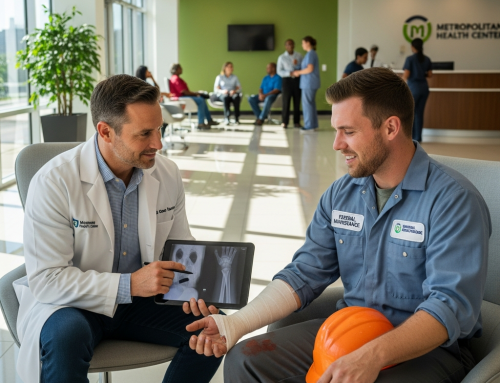
Dublin Workers Comp Clinic: When to Seek Care

Picture this: you’re at work, focused on getting through your Tuesday morning routine, when suddenly your back seizes up like a rusty door hinge. Maybe you lifted that box wrong, or perhaps you’ve been hunched over a computer for so long your spine decided to stage a revolt. Either way, you’re standing there – or more likely, carefully not moving – wondering if this is “real” enough to make a fuss about.
Sound familiar?
Here’s the thing that drives me crazy about workplace injuries… we’ve somehow convinced ourselves there’s this magical line between “tough it out” and “okay, maybe I should do something about this.” And honestly? Most of us are terrible at figuring out where that line actually is.
I’ve talked to countless people who’ve limped around for weeks, downing ibuprofen like candy, because they didn’t want to be “that person” who makes a big deal out of nothing. Then there are others who’ve ignored genuine red flags – numbness, shooting pain, that weird tingling that definitely isn’t normal – because they assumed it would just… go away on its own.
The reality is, when you’re dealing with a work-related injury in Dublin, you’re not just managing pain. You’re navigating workers’ compensation, trying to keep your job secure, wondering about medical bills, and probably second-guessing yourself every step of the way. Am I hurt enough? Is this really from work? What if my boss thinks I’m faking it?
These questions aren’t just in your head – they’re completely valid concerns that affect real people with real bills and real responsibilities. And that’s exactly why knowing when and where to seek care matters so much more than just the physical symptoms you’re dealing with.
Here’s what most people don’t realize: workers’ comp isn’t just about covering medical expenses (though that’s obviously important). It’s about protecting your right to proper care, your job security, and your long-term health. But – and this is a big but – the system only works when you know how to work with it.
That’s where Dublin’s workers’ comp clinics come in. These aren’t your typical doctor’s offices. They understand the unique challenges of workplace injuries, the paperwork maze you’re about to enter, and most importantly, they know how to document everything properly so you’re protected down the road.
But timing matters. Wait too long, and you might find yourself in a frustrating back-and-forth about whether your injury is actually work-related. Seek care too quickly for something minor, and you might feel like you’re overreacting. It’s this weird Goldilocks situation where you’re trying to find the “just right” moment.
The truth is, there’s no perfect formula, but there are definitely some clear signals that shouldn’t be ignored. Some symptoms that seem minor can actually indicate serious underlying issues – the kind that get worse if left untreated. On the flip side, some dramatic-feeling injuries might actually be straightforward to treat if you address them promptly.
What I want to share with you isn’t just a list of symptoms to watch for (though we’ll definitely cover that). It’s the real-world guidance I wish someone had given me years ago when I was trying to figure out this whole system. We’re going to talk about recognizing when your body is telling you something important, understanding how Dublin’s workers’ comp system actually works, and – maybe most importantly – how to advocate for yourself without feeling like you’re making mountains out of molehills.
You’ll learn about the specific types of injuries that are most common in Dublin workplaces, what to expect during your first visit to a workers’ comp clinic, and how to navigate those tricky conversations with employers and insurance companies. We’ll also dig into some scenarios that might surprise you – situations where seeking care is crucial even when you feel “fine.”
Because here’s what I’ve learned: your instincts about your own body are usually pretty good. If something feels off, if you’re in pain, if you’re worried – those feelings are telling you something worth paying attention to. The key is knowing what to do with that information… and that’s exactly what we’re going to figure out together.
What Actually Counts as a Work Injury (It’s More Than You Think)
Here’s the thing about work injuries – they’re not always the dramatic, obvious stuff you see in movies. Sure, if you slip on a wet floor and break your wrist, that’s clearly work-related. But what about that nagging back pain that started after months of sitting at your desk? Or the carpal tunnel that crept up slowly from typing reports?
Think of work injuries like a spectrum. On one end, you’ve got the acute injuries – the sudden “oh no” moments that happen in an instant. A cut from machinery, a fall from a ladder, getting hit by something… these are the clear-cut cases. On the other end, though, you’ve got occupational diseases and repetitive stress injuries. These are the sneaky ones that develop over time, like a slow leak in your car tire.
The confusing part? Both ends of that spectrum typically qualify for workers’ comp coverage. Even if your injury didn’t happen in a single dramatic moment, it might still be work-related if your job contributed to it significantly.
The “Arising Out Of” Puzzle
Workers’ comp has this phrase that sounds like legal mumbo jumbo: “arising out of and in the course of employment.” I know, I know – it’s about as clear as mud. But here’s what it basically means…
Your injury needs to happen while you’re doing work stuff AND it needs to be connected to your actual job duties. It’s like a Venn diagram where both circles have to overlap.
So if you’re a construction worker and you hurt your back lifting materials – that clearly fits. But what if you’re that same construction worker and you slip in the company parking lot on your way to lunch? That’s where it gets interesting (and sometimes frustrating). The parking lot incident might qualify because you were on company property during work hours, even though you weren’t actively swinging a hammer.
When Your Body Keeps the Score
Your body doesn’t really care about employment law – it just knows when something hurts. And sometimes, workplace injuries don’t announce themselves with sirens and flashing lights. They whisper instead of shout.
Take someone who works in an office. They might notice their shoulders getting tighter each week, or their wrists starting to ache after long typing sessions. These aren’t “accidents” in the traditional sense, but they’re absolutely real injuries that can qualify for workers’ comp coverage.
The tricky part is recognizing these gradual injuries early enough. It’s like noticing your house plant is struggling – by the time the leaves are obviously wilting, the problem’s been building for a while. Your body often gives you subtle signals before things become serious, but we’re pretty good at ignoring those whispers until they become shouts.
The Gray Areas (And Why They Matter)
Here’s where things get genuinely confusing, and honestly, even workplace injury experts sometimes scratch their heads over these scenarios…
What about stress-related conditions? In some cases, yes – severe workplace stress that leads to physical symptoms might qualify. What about injuries that happen during company events or team building activities? Often yes, but not always. What if you have a pre-existing condition that gets worse because of work? That’s… complicated.
These gray areas exist because work and life don’t always fit into neat little boxes. Your knee arthritis might have been there before you took the job, but if your work requires a lot of standing and it makes the condition significantly worse, you might have a claim.
Why Timing Actually Matters More Than You’d Expect
There’s this thing in workers’ comp that’s almost counterintuitive – sometimes waiting to seek care can actually hurt your case, even if your injury seems minor at first.
Think of it like reporting a car accident to your insurance company. They want to hear about it right away, not three months later when you suddenly decide your neck hurts. Workers’ comp operates on similar principles – the sooner you document what happened and get medical attention, the stronger your case tends to be.
This doesn’t mean you need to rush to the emergency room for every little ache (please don’t – the ER staff will not appreciate it). But it does mean that getting things on record early can save you headaches down the road. Sometimes what seems like a minor tweak today becomes a major problem tomorrow, and having that early documentation can make all the difference.
Timing Your Visit: Don’t Wait for the Pain to Get Worse
Here’s something most people don’t realize – the sooner you get evaluated after a workplace injury, the better your outcomes. I’m talking within 24-48 hours if possible. Your body’s in this weird state right after an injury where inflammation is just starting to ramp up, and catching things early can literally change the trajectory of your recovery.
But here’s the catch… a lot of workers think they need to “tough it out” first. Maybe it’s that old-school mentality, or maybe you’re worried about seeming dramatic. Trust me on this – I’ve seen too many cases where someone waited two weeks with back pain, thinking it would resolve, only to find out they’d developed compensation patterns that made everything worse.
The sweet spot for seeking care? When you notice you’re moving differently. Not when the pain is unbearable – when you catch yourself favoring one side, or when you realize you’ve been avoiding certain movements without really thinking about it.
Red Flags That Mean “Get Seen Today”
Okay, let’s talk about the symptoms that should have you picking up the phone immediately. And I mean immediately – not “I’ll call tomorrow if it’s not better.”
Sharp, shooting pains down your arms or legs – this isn’t your garden-variety soreness. This suggests nerve involvement, and nerves don’t mess around. They’re like that friend who holds grudges… if you don’t address the issue quickly, they remember everything.
Numbness or tingling that lasts more than a few minutes – especially if it comes and goes. Your body’s trying to tell you something important here. Listen to it.
Any injury to your head or neck, even if you feel “fine.” Concussions are sneaky. I’ve had patients come in three days after a workplace fall saying they just felt “off” – turns out they had a mild traumatic brain injury that needed immediate attention.
And here’s one people often ignore – if you can’t sleep because of the pain or discomfort. Your body does most of its healing during sleep. If an injury is disrupting that process, you’re already behind the eight ball.
What to Bring (and What Not to Forget)
This might seem obvious, but you’d be surprised how many people show up unprepared and end up making multiple trips. Here’s your checklist
Your workers’ comp claim number – write it down, don’t rely on remembering it. Actually, better yet, take a photo of any paperwork with your phone.
A detailed timeline of what happened. Not just “I hurt my back lifting something” but specifics: What time did it happen? What exactly were you lifting? How much did it weigh? Were you twisting? Had you lifted similar items before without issue? The more details, the better we can understand what went wrong.
Any witness contact information – seriously, this can be crucial later if there are questions about your claim. Even if it seems like no big deal now.
Photos of the accident scene, if possible. I know this might feel awkward, but insurance companies love evidence. If there was a spill that caused your slip, or a piece of equipment that malfunctioned, document it.
Questions to Ask During Your Visit
Don’t just be a passive patient. This is your health and your claim we’re talking about. Here are the questions that will actually help you
“What’s my expected timeline for returning to work?” Push for specifics, not vague answers like “it depends.” You need to plan your life around this.
“Are there specific activities I should avoid, and for how long?” Get this in writing if possible. Your employer might pressure you to return to full duty before you’re ready.
“What warning signs should I watch for that would indicate I need to come back sooner?” Every injury has potential complications – know what to look for.
And here’s a big one – “How will this be documented for my workers’ comp case?” You want to make sure everything is properly recorded and communicated to the right people.
Following Up: The Part Everyone Skips
Here’s where most people drop the ball – they get initial treatment and then… disappear. Don’t be that person. Workers’ comp cases live and die on documentation, and consistent follow-up care shows you’re serious about getting better.
Schedule your follow-up before you leave. I know, I know – you’re hoping you won’t need it. But having that appointment on the books means you’re more likely to actually come back if you’re not improving as expected.
And keep a simple pain journal. Nothing fancy – just note your pain levels daily and what activities make things better or worse. This becomes invaluable information if your case gets complicated down the road.
The Paperwork Maze That Makes Your Head Spin
Let’s be honest – workers’ comp paperwork feels like it was designed by someone who actively hates injured workers. You’re dealing with pain, maybe can’t work, and suddenly you’re drowning in forms that might as well be written in ancient Greek.
Here’s what actually helps: Don’t try to tackle it all at once. Seriously. Pick one form, fill it out completely, then take a break. Ask your clinic’s front desk staff to walk you through each section – that’s literally part of their job, and most of them are genuinely happy to help. Keep copies of everything in a folder (physical or digital, whatever works for you). And that claim number? Write it on a sticky note and put it everywhere. You’ll need it more than you think.
When Your Boss Becomes… Weird
This one’s uncomfortable, but we need to talk about it. Sometimes supervisors who were perfectly normal before your injury suddenly start acting strange. Maybe they’re questioning whether you’re “really” hurt, suggesting you could just push through it, or making comments about how “convenient” the timing is.
It stings. And it’s not okay.
Document these interactions – not because you’re looking for trouble, but because patterns matter. Send yourself emails summarizing conversations (“Just talked to John at 2pm about my restrictions. He said…”). Keep it factual, not emotional. If things escalate, you’ll have a record. More importantly, remember that their reaction often has nothing to do with you and everything to do with their own stress about deadlines, coverage, or pressure from above.
The “Am I Hurt Enough?” Mental Loop
This might be the trickiest challenge of all. You’re sitting there wondering if you’re overreacting, if other people have it worse, if you should just tough it out. Meanwhile, your back is screaming every time you bend over, or your wrist throbs after typing for more than ten minutes.
Here’s the thing – injury isn’t a competition. You don’t need to rank in the top 10% of human suffering to deserve care. If something happened at work and now you’re experiencing pain or limitation that wasn’t there before… that’s enough. That’s literally what workers’ comp exists for.
Actually, that reminds me of something one of our patients said: “I spent three weeks convincing myself it wasn’t that bad while I could barely sleep.” Don’t be that person. Trust what your body is telling you.
Fighting the Appointment Shuffle
Workers’ comp often means you can’t just waltz into your regular doctor’s office. You might need to see specific providers, get referrals approved, or wait for authorizations. It’s like your medical care suddenly has a bureaucratic chaperone.
The key is staying organized and being persistently polite. Keep a running list of who you’ve called, when, and what they told you. When you call back (and you will call back), reference your previous conversations: “Hi, this is Sarah. I spoke with Mark yesterday about my authorization…”
Don’t be afraid to escalate. If the person on the phone can’t help, ask to speak with a supervisor. If that doesn’t work, contact your claims adjuster directly. Sometimes a little squeaky wheel action is exactly what’s needed.
The Return-to-Work Anxiety Spiral
Coming back to work after an injury – even with restrictions – can feel terrifying. Will you reinjure yourself? Can you actually do the modified duties they’re suggesting? What if your coworkers think you’re getting special treatment?
Start by having an honest conversation with your doctor about what you can and can’t do. Be specific – “I can sit for 30 minutes at a time” is more helpful than “my back hurts sometimes.”
Talk to your supervisor before your first day back. Walk through your restrictions together. Ask questions about how tasks might be modified. Most managers appreciate this proactive approach because it prevents awkward moments later.
And give yourself permission to speak up if something isn’t working. Modified duty isn’t supposed to be a test of your pain tolerance – it’s supposed to help you heal while staying productive.
When Progress Feels Impossible
Some injuries don’t follow neat timelines. You might feel better for a few days, then worse, then better again. It’s maddening, especially when everyone keeps asking “How are you feeling?”
Recovery isn’t linear – it’s more like a messy upward trend with lots of zigs and zags. Track your good days and bad days if it helps you see the bigger picture. Celebrate small wins, even if they feel insignificant. And remember that healing takes however long it takes… your body didn’t get the memo about your schedule.
What to Expect When You First Call
Look, I’ll be straight with you – navigating workers’ comp can feel like trying to solve a Rubik’s cube blindfolded. When you first call a Dublin workers’ comp clinic, you’re probably stressed, maybe in pain, and definitely confused about what comes next.
Most clinics will ask you some basic questions over the phone: when did the injury happen, what type of work were you doing, have you already filed a claim? Don’t worry if you don’t have all the answers yet – that’s totally normal. They’re not testing you; they’re just trying to help streamline your visit.
You’ll likely get an appointment within a day or two for acute injuries, maybe a week for less urgent issues. Yes, it feels like forever when you’re hurting, but that’s actually pretty standard timing. The clinic needs to coordinate with your employer’s insurance, and… well, paperwork takes time. Unfortunately.
Your First Visit – The Reality Check
Here’s what actually happens (not the glossy brochure version): You’ll fill out forms. Lots of them. Bring your ID, any paperwork from your employer, and honestly? A good book or your phone charger, because there might be some waiting.
The doctor will examine you thoroughly – and I mean thoroughly. They’re not being difficult; they need detailed documentation for the insurance company. Expect questions about your pain level, how the injury affects your daily activities, even stuff that might seem unrelated. They’re building a complete picture.
Don’t be surprised if they order tests right away. X-rays, MRIs, blood work – it’s not because they think you’re faking it. Workers’ comp requires objective evidence, and that means documentation, documentation, documentation.
The Treatment Timeline – Managing Your Expectations
This is where I need to be really honest with you… workers’ comp treatment doesn’t move at the speed of regular healthcare. Everything takes longer. Not because anyone’s trying to frustrate you, but because there’s an extra layer of approval for pretty much everything.
Physical therapy? Might take a week to get approved. Specialist referral? Could be two weeks. Surgery, if needed? Well, that’s a whole process involving second opinions and pre-authorization that can stretch for months.
I know it’s maddening. You’re thinking, “But I’m hurt now!” And you’re absolutely right to feel that way. The system isn’t designed for speed – it’s designed for cost control and documentation. Not exactly comforting, but at least you know what you’re dealing with.
Staying on Top of Your Case
Here’s something they don’t tell you enough: you need to be your own advocate. That doesn’t mean being difficult or demanding, but it does mean staying informed and asking questions.
Keep a simple log – when you called, who you talked to, what they said. Take photos of any visible injuries (trust me on this one). Keep copies of everything. I’ve seen too many cases where important details got lost in the shuffle simply because nobody wrote them down.
Follow up on appointments and referrals. If someone says “we’ll call you in a few days” and a week passes… call them. The squeaky wheel really does get the grease in workers’ comp cases.
When Things Don’t Go as Planned
Sometimes – and I hate that this happens – claims get denied or treatment gets delayed. It’s not necessarily personal, but it feels personal when you’re the one dealing with pain and bills.
If your claim hits a snag, don’t panic. Most issues can be resolved with additional documentation or appeals. Your Dublin workers’ comp clinic should have experience navigating these challenges and can guide you through the process.
Some cases do require legal help, but that’s usually when there are disputes about whether an injury is work-related or if there are complications with permanent disability ratings. Most straightforward injury cases move through the system just fine, even if slowly.
The Light at the End of the Tunnel
Look, I won’t sugarcoat it – workers’ comp can be a frustrating experience. But here’s the thing: it’s there for a reason, and when it works (which it usually does, eventually), it provides crucial protection for injured workers.
Most people do get the care they need, return to work, and move on with their lives. The system isn’t perfect, but it’s functional. Your job right now is just to take it one step at a time, stay organized, and remember that healing – both physical and bureaucratic – takes time.
Here’s the thing about workplace injuries – they have this sneaky way of making us second-guess ourselves. You’re sitting there wondering if that back pain is “bad enough” for a doctor’s visit, or if you’re being dramatic about that wrist that’s been bothering you for weeks. But here’s what I’ve learned from working with countless patients: your body knows what it’s talking about.
You don’t need permission to seek care when something feels off. Whether it’s a dramatic slip-and-fall incident or something that’s been gradually getting worse over time… both deserve attention. Your health isn’t something you should have to negotiate with yourself about.
Trust Your Instincts
I’ve seen too many people wait until they can barely function before reaching out for help. They’ll push through pain for months – thinking they’re being tough or responsible – only to realize they could’ve avoided so much suffering with earlier intervention. It’s like trying to drive your car with the check engine light on. Sure, you might make it a few more miles, but why risk it?
The workers’ compensation system exists specifically because work-related injuries are real, common, and deserve proper treatment. You’ve earned this protection through your hard work, and there’s absolutely nothing wrong with using it when you need it.
You’re Not Alone in This
Navigating a workplace injury can feel overwhelming. There are forms to fill out, protocols to follow, and sometimes – let’s be honest – employers who aren’t as supportive as they should be. But remember, you have advocates in your corner. Healthcare providers who specialize in workers’ comp cases understand the system inside and out, and we’re here to help you through it.
Every day, we see people who were hesitant to seek care – worried about job security, concerned about being seen as complainers, or simply unsure if their symptoms were “serious enough.” What we tell them is what I’m telling you now: your wellbeing matters more than any of those concerns.
Moving Forward
Whether you’re dealing with acute pain from a recent incident or chronic discomfort that’s been building up over time, reaching out is the first step toward feeling like yourself again. Early intervention often means simpler treatment, faster recovery, and getting back to the activities you love sooner.
Don’t let uncertainty keep you in pain longer than necessary. If you’re reading this and wondering whether your situation warrants professional attention… that wondering itself might be your answer. Your instincts are usually spot-on, and your symptoms deserve to be heard by someone who can help.
If you’re ready to take that next step – or even if you just want to talk through your concerns with someone who gets it – we’re here. Our team understands the unique challenges of workplace injuries, and we’re committed to helping you navigate both your recovery and the workers’ comp process with confidence.
You don’t have to figure this out alone, and you definitely don’t have to suffer in silence. Give us a call when you’re ready – we’ll be here to listen and help you move forward.