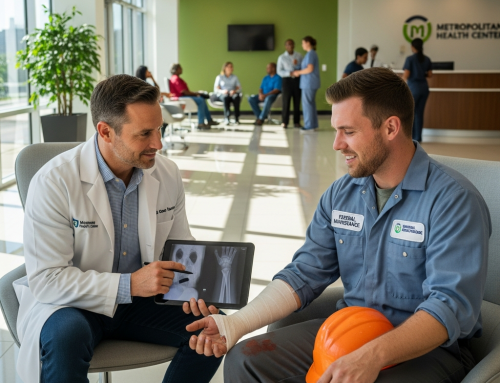
How DOL Doctors Support Pain Management DOL Cases

Sarah’s been dreading this moment for weeks. She’s sitting in her car outside the Department of Labor office, staring at a stack of medical forms that might as well be written in ancient hieroglyphics. Her back injury from that slip at the warehouse three months ago? It’s not getting better. Actually, it’s getting worse – and now she’s caught in this confusing maze of workers’ compensation claims, insurance denials, and medical appointments that lead… nowhere.
Sound familiar?
If you’ve ever found yourself tangled up in a DOL case – whether it’s from a workplace injury, repetitive strain, or that moment when your body just said “nope” while you were doing your job – you know that sinking feeling. The pain is real, your ability to work is compromised, and yet somehow proving this to the powers that be feels like trying to solve a Rubik’s cube while wearing oven mitts.
Here’s the thing that nobody tells you upfront: your choice of doctor can make or break your entire case.
I’ve seen too many people stumble through this process, bouncing between physicians who don’t understand the DOL system, getting conflicting opinions, or worse – ending up with doctors who simply don’t take their pain seriously. Meanwhile, the bills pile up, work becomes impossible, and that nagging voice in your head whispers, “Maybe I’m just not tough enough.”
Stop right there. Your pain is valid. Your struggle is real. And there’s actually a whole category of medical professionals who specialize in exactly what you’re going through.
The Game-Changers You Didn’t Know Existed
DOL doctors – physicians who specifically understand the Department of Labor’s workers’ compensation system – aren’t just regular doctors who happen to take your insurance. They’re specialists who speak both languages: medical expertise AND bureaucratic requirements. Think of them as translators who can take your very real, very personal pain and present it in a way that the system actually recognizes and responds to.
But here’s where it gets interesting (and honestly, a little frustrating)… finding the right DOL doctor isn’t like picking a restaurant off Yelp. These physicians understand the intricate dance between medical evidence and legal documentation. They know which tests carry weight in DOL evaluations, how to document functional limitations in ways that matter, and – perhaps most importantly – they take workplace injuries seriously.
You see, when you’re dealing with a DOL case, you’re not just looking for someone to make the pain go away (though that would be nice, wouldn’t it?). You need someone who can build a compelling medical case that supports your claim while actually helping you heal. It’s like needing a contractor who’s both an artist and an engineer – they need to make it beautiful AND structurally sound.
What Nobody Tells You About Pain Management in DOL Cases
The dirty little secret of workers’ comp? Pain management becomes exponentially more complicated when lawyers, insurance companies, and government agencies get involved. Your regular family doctor might be wonderful, but they probably don’t understand why certain treatment approaches get approved while others get denied faster than a teenager’s request for car keys.
DOL doctors who specialize in pain management? They’ve navigated these waters thousands of times. They know which documentation opens doors and which approaches hit bureaucratic brick walls. More importantly, they understand that your goal isn’t just to manage pain – it’s to get your life back.
Throughout this article, we’re going to pull back the curtain on how these specialized physicians operate. You’ll discover why their approach to pain management differs from traditional medical care, what makes their documentation so powerful in DOL cases, and honestly? How to tell the difference between a DOL doctor who truly has your back and one who’s just going through the motions.
We’ll also explore the specific ways these doctors can accelerate your case resolution – because let’s face it, being stuck in workers’ comp limbo while dealing with chronic pain is nobody’s idea of a good time.
Ready to understand how the right medical ally can transform your DOL experience from bureaucratic nightmare into manageable process? Let’s talk about what these doctors actually do differently… and why it matters so much for your specific situation.
The Complicated Web of DOL Pain Cases
Here’s the thing about Department of Labor cases involving pain – they’re nothing like what you see on TV medical dramas. There’s no dramatic diagnosis moment where everything clicks into place. Instead, it’s more like trying to solve a puzzle where half the pieces look identical and the picture on the box keeps changing.
When a federal employee gets injured at work, they don’t just deal with their immediate supervisor and move on. They enter what I like to call the “bureaucratic maze” – a system that involves multiple agencies, endless paperwork, and medical evaluations that can stretch on for months or even years. The Office of Workers’ Compensation Programs (OWCP) becomes the main player here, and they’re… well, let’s just say they’re thorough. Really, really thorough.
Pain: The Invisible Challenge
You know how when you stub your toe, everyone can see you hopping around? Pain from workplace injuries isn’t usually that obvious. We’re talking about back pain that makes sitting at a desk feel like torture, nerve pain that shoots down your leg without warning, or chronic headaches that turn fluorescent office lighting into your personal nemesis.
This invisible nature of pain creates a unique problem. Unlike a broken bone that shows up crystal clear on an X-ray, chronic pain lives in this gray area where objective medical evidence can be… tricky. It’s like trying to prove that a song is beautiful – you know it is, your whole body tells you it is, but putting that into measurable, documentable terms? That’s where things get complicated.
The DOL system – and I’m being generous calling it a “system” here – requires what they call “objective medical evidence.” They want proof. Concrete, measurable, undeniable proof that your pain is real and related to your workplace injury. Sometimes I think they’d prefer if pain came with a receipt.
Where DOL Doctors Enter the Picture
This is where DOL physicians become absolutely crucial, though their role often confuses people. These aren’t your regular doctors – the ones you see for checkups or when you’ve got the flu. DOL doctors are specialists who understand both medicine AND the peculiar requirements of federal workers’ compensation cases.
Think of them as translators. They speak fluent “medical evidence” and fluent “government bureaucracy” – two languages that rarely play well together. Your regular doctor might write “patient reports significant pain” in their notes. A DOL doctor knows that won’t cut it. They need to document pain levels, functional limitations, objective findings, and treatment responses in ways that satisfy OWCP’s requirements.
Actually, that reminds me of something important – these doctors aren’t working against you. I know it can feel that way sometimes, especially when you’re dealing with yet another evaluation or form. But they’re really trying to build a bridge between your lived experience of pain and the DOL’s need for documentation.
The Documentation Dance
Here’s where things get particularly… interesting. The DOL operates on what you might call “evidence-based skepticism.” They’ve seen it all – legitimate claims, exaggerated claims, fraudulent claims. So they’ve developed this elaborate system of checks and balances that can feel overwhelming when you’re the person caught in the middle of it.
DOL doctors understand this dance. They know which tests carry weight, which terminology resonates with claims examiners, and how to present a case that accurately reflects your condition while meeting all the bureaucratic requirements. It’s like they’re writing in a very specific dialect that regular doctors might not be fluent in.
The counterintuitive part? Sometimes getting the right documentation means more testing, more appointments, more evaluation – even when you and your doctor already know exactly what’s wrong. I wish I could tell you there’s a simpler way, but the system is what it is.
Building Your Medical Foundation
What makes DOL doctors particularly valuable is their ability to create what I call a “medical foundation” for your case. They don’t just treat your immediate symptoms – though that’s certainly important. They build a comprehensive picture that shows how your injury affects your daily life, your work capacity, and your long-term prognosis.
This foundation becomes the backbone of your entire DOL case, supporting everything from treatment approvals to disability determinations. Without it, even the most legitimate claim can crumble under bureaucratic scrutiny.
Building Your Pain Documentation Arsenal
Look, here’s something most people don’t realize about DOL cases – your doctor isn’t just treating you, they’re essentially becoming your advocate in a legal maze. And honestly? The quality of their documentation can make or break your claim.
Start keeping a detailed pain journal *before* your appointment. I’m talking specifics here – not just “my back hurt today” but “sharp shooting pain down left leg at 7/10 when bending to pick up laundry basket at 2 PM, lasted 45 minutes.” Your DOL doctor needs these concrete examples to paint an accurate picture of how your injury affects your daily life.
Here’s a insider tip: bring photos. Seriously. If you’re dealing with swelling, visible injuries, or mobility limitations, document them. One patient I know brought pictures showing how she couldn’t reach above shoulder height – that visual evidence helped secure her claim when written descriptions fell short.
The Art of Medical Translation
Your DOL doctor has to translate your experience into medical language that claims examiners understand. But here’s the thing – you need to help them get it right.
Don’t minimize your symptoms (we all do this, don’t we?). When your doctor asks about pain levels, resist that urge to say “oh, it’s not that bad” when you’re actually struggling. Be honest about your worst days, not just your okay ones. The DOL needs to understand your limitations on bad days, not just when you’re having a good spell.
Practice describing your pain using specific terms. Instead of “it hurts,” try “burning sensation,” “stabbing pain,” or “constant aching.” These descriptors help your doctor choose the right diagnostic codes – and those codes directly impact your benefits.
Strategic Timing for Appointments
Here’s something claims adjusters don’t want you to know – the timing of your appointments matters more than you think. Try to schedule visits when you’re experiencing typical symptoms, not during your rare good days.
If you’re having a flare-up, don’t reschedule “because you don’t want to bother the doctor.” That flare-up? That’s exactly what they need to see and document. Your DOL doctor can’t properly assess limitations they’ve never witnessed.
Actually, that reminds me of a patient who kept rescheduling appointments whenever her chronic fatigue was particularly bad. When she finally came in during a rough patch, her doctor was able to document symptoms that completely changed her case outcome.
Building a Paper Trail That Works
Your DOL doctor needs ammunition for your case, and that means creating a comprehensive medical record. But it’s not just about quantity – it’s about strategic documentation.
Request copies of all visit notes and read them carefully. Look for phrases like “patient demonstrates limited range of motion” or “visible signs of distress during examination.” These clinical observations carry serious weight with claims adjusters. If something seems inaccurate or incomplete, speak up at your next visit.
Keep track of treatments that don’t work just as carefully as ones that do. Failed physical therapy attempts, medications that caused side effects, procedures that didn’t provide relief – this all demonstrates the persistent nature of your condition.
The Follow-Up Formula
Don’t disappear between appointments, especially if your condition worsens. Most DOL doctors prefer patients who communicate changes rather than suffer in silence. A quick call about new symptoms or increased limitations can lead to additional documentation that strengthens your case.
Set up a system for regular check-ins, even if you’re not seeing dramatic changes. Chronic conditions need consistent monitoring, and gaps in treatment can be used against you by claims adjusters looking for reasons to deny benefits.
Working the System, Not Against It
Remember, your DOL doctor is operating within a specific framework – they’re not just providing medical care, they’re participating in a legal process. Understanding this can help you be a better partner in your own case.
Come prepared with questions about work restrictions and functional limitations. Your doctor can’t advocate for accommodations you haven’t discussed. Be specific about job tasks you’re struggling with – lifting, sitting, standing, concentrating. The more detailed information you provide, the more precise their recommendations can be.
And here’s the real truth about DOL cases – patience pays off. Building a solid medical record takes time, but rushing the process often backfires. Your doctor needs multiple data points to establish patterns and document the ongoing impact of your injury.
The Documentation Nightmare
Let’s be honest – keeping track of every doctor’s appointment, every treatment, every flare-up… it’s exhausting when you’re already dealing with chronic pain. You’re supposed to remember what happened three months ago when some days you can barely remember if you took your morning medication.
Here’s what actually works: don’t try to be perfect. Start a simple pain journal – even just notes in your phone. Rate your pain 1-10, note what you did that day, how treatments affected you. The DOL doesn’t need Shakespeare, they need consistency. Those scattered notes become your timeline, and that timeline becomes your proof.
Many people think they need medical records going back years. Actually, what matters more is showing the pattern of how your condition affects your work capacity. That recent flare-up that kept you home for three days? More relevant than a diagnosis from 2019.
When Your Doctor Doesn’t “Get” Disability Claims
This one’s tough because – and I hate saying this – some doctors just aren’t great at disability documentation. They’re fantastic at treating you, but when it comes to explaining how your condition impacts your specific job duties… well, that’s a different skill set entirely.
You might have a physician who writes vague notes like “patient continues to experience pain.” That doesn’t help anyone understand why you can’t lift 50 pounds or stand for four hours straight. The DOL needs specifics.
The solution? Come prepared. Before your appointment, write down exactly what tasks at work are becoming impossible or dangerous. Don’t just say “my back hurts” – explain that you can’t bend to pick up packages, or that sitting at a desk for more than 30 minutes leaves you in agony for hours afterward.
Give your doctor context about your actual job requirements. They might not realize that “light duty” in your workplace still means being on your feet all day.
The Emotional Rollercoaster Nobody Warns You About
Here’s something they don’t tell you in the DOL pamphlets – this process is going to mess with your head. One day you’ll feel hopeful because your doctor submitted strong documentation. The next day you’ll spiral because you had a “good” pain day and worry that somehow invalidates your claim.
You’ll probably feel guilty on days when the pain is manageable. You might catch yourself thinking, “Maybe I’m not really that disabled.” This is completely normal, and it doesn’t mean you’re faking or exaggerating. Chronic conditions fluctuate – that’s literally part of what makes them disabling.
The mental game is harder than anyone admits. You’re already dealing with the frustration and depression that often comes with chronic pain, and now you’re navigating a bureaucratic system that sometimes feels designed to exhaust you into giving up.
Communication Breakdowns Between Everyone
Sometimes it feels like you’re playing telephone between your doctor, the DOL case manager, your employer, and maybe a lawyer. Information gets lost, deadlines get missed, and suddenly everyone’s asking you for the same form you swear you already submitted twice.
Create a simple tracking system – even just a notebook where you write down who you talked to, when, and what they said. Take notes during phone calls. Follow up important conversations with emails: “Just to confirm what we discussed today…”
Don’t assume anyone else is keeping track of your timeline or coordinating with other parties. You become the hub, which is annoying but necessary.
When the Timeline Drags On… and On
Nobody tells you how long this actually takes. Not the initial approval (which might be quick) but the ongoing management, the periodic reviews, the requests for updated documentation. It’s not a one-and-done situation.
The waiting is brutal when you’re in pain and worried about finances. You’ll probably call to check on your case status more than you should – we all do it. Set realistic expectations: this is a marathon, not a sprint.
Use the waiting time productively when you can. Keep documenting symptoms, continue following your treatment plan, maintain those medical relationships. The case isn’t just sitting in limbo – it’s being processed, reviewed, sometimes sent to medical consultants for additional opinions.
Remember, the DOL wants to help people who legitimately can’t work due to their conditions. Yes, they have to verify everything – that’s their job – but they’re not your enemy. They’re just slow, methodical, and very, very thorough.
What to Expect in Your First Few Appointments
Your initial visit isn’t going to solve everything overnight – and honestly, any doctor who promises that should probably raise some red flags. Most DOL cases involving pain management require a methodical approach, especially since we’re dealing with both your immediate discomfort and the complex world of workers’ compensation documentation.
During that first appointment, expect to spend more time talking than you might be used to. We’re not just looking at where it hurts… we need to understand how the injury happened, what treatments you’ve already tried, and how this pain is affecting your daily life. Can you still sleep? Are you avoiding certain activities? These details matter enormously for your case.
You’ll likely leave with a clear treatment plan, but here’s the thing – it might feel like a lot of moving parts. There could be physical therapy referrals, medication adjustments, imaging studies to schedule. Don’t worry if it feels overwhelming. We’ve learned that breaking everything into manageable steps works better for everyone involved.
The Reality of DOL Case Timelines
Let’s be honest about timing because – and I see this all the time – unrealistic expectations can be more frustrating than the actual pain sometimes.
Most DOL pain management cases don’t resolve in weeks. We’re typically looking at months, and for complex cases… well, it could be longer. I know that’s not what you want to hear, especially when you’re dealing with work restrictions and financial stress. But here’s why rushing rarely works in your favor.
The DOL system moves at its own pace. Even when we submit reports promptly (which we always do), approvals for treatments or specialists can take weeks. Meanwhile, your body needs time to heal and respond to treatments. That injection that might provide significant relief? You won’t know its full effect for 2-3 weeks minimum.
Think of it like renovating a house while you’re still living in it – you can’t just tear everything down and rebuild overnight. We’re working around your daily life, your work schedule, and a system that requires extensive documentation for every step.
Building Your Medical Foundation
Here’s something that might surprise you – a huge part of what we’re doing early on is building a rock-solid medical record. Every visit, every test, every treatment attempt creates a paper trail that supports your case.
This means we might recommend treatments that seem conservative at first. Physical therapy before injections, for example, or trying certain medications before moving to stronger options. It’s not that we don’t believe your pain is severe – we absolutely do. But the DOL often wants to see a logical progression of treatments, starting with less invasive approaches.
Actually, that reminds me… patients sometimes worry we’re “experimenting” on them when we try different approaches. That’s not it at all. We’re methodically working through evidence-based treatments while creating documentation that shows we’ve been thorough and reasonable.
When Progress Feels Slow
There will probably be moments when you wonder if anything is working. Maybe week three of physical therapy and you’re still hurting. Or that new medication isn’t providing the relief you hoped for.
This is completely normal, and it doesn’t mean we’re on the wrong track. Pain management – especially in the context of workplace injuries – rarely follows a straight line. You might have good days and setbacks. Sometimes treatments need time to build up in your system, or we need to fine-tune dosages.
What I always tell patients is this: we’re not just treating your pain, we’re also protecting your future. Every documented treatment, every follow-up visit, every therapy session strengthens your case. Even the treatments that don’t work perfectly serve a purpose – they show we’ve explored appropriate options.
Your Role in the Process
You’re not a passive participant in this process, and honestly, the patients who engage actively tend to have better outcomes – both medically and legally.
Keep that pain diary we discussed. Show up for appointments even when you’re feeling better (those good days are important data points too). Ask questions when something doesn’t make sense. And please, communicate with us about what’s working and what isn’t.
The DOL system can feel impersonal sometimes, but remember – you have a medical team that’s genuinely invested in your recovery and your case. We’re in this together, even when the timeline feels frustratingly long.
You know what strikes me most about working with patients dealing with workplace injuries? It’s not just the physical pain – though that’s real and shouldn’t be minimized. It’s the overwhelming feeling that you’re navigating this whole system alone, trying to decode medical reports while juggling insurance calls and wondering if anyone actually understands what you’re going through.
Here’s the thing… you don’t have to figure this out by yourself.
When you’re dealing with a Department of Labor case, having the right medical team isn’t just helpful – it’s transformative. These specialized doctors aren’t just treating your injury; they’re becoming your advocates in a system that can feel pretty impersonal sometimes. They speak the language that adjusters and case managers understand, but more importantly, they listen to *your* language when you describe how this injury has changed your daily life.
Think of it like having a translator who’s fluent in both your experience and the bureaucratic requirements that need to be met. They document not just what’s wrong, but how it affects your ability to work, to sleep, to play with your kids on weekends. That comprehensive picture? It matters more than you might realize.
And honestly, there’s something profoundly reassuring about working with someone who’s seen hundreds of cases like yours. They know which treatments typically work best for workplace injuries. They understand the timeline pressures you’re facing. They’ve helped other people get back to their lives – maybe not exactly the same as before, but genuinely better than where they are right now.
The paperwork, the appointments, the follow-ups… I won’t lie, it can feel like a lot sometimes. But when you have a medical team that’s coordinated and experienced with DOL cases, so much of that burden gets lifted from your shoulders. They handle the administrative maze so you can focus on what really matters: getting better.
What really gets me is when patients tell me they wished they’d reached out sooner. “I thought I had to tough it out,” they’ll say, or “I didn’t know this kind of help was available.” Listen – asking for support isn’t giving up. It’s actually one of the smartest things you can do for your recovery and your future.
Your injury happened at work, but your life is so much bigger than that workplace. You deserve care that recognizes that reality and works toward getting you back to all the things that matter to you.
If you’re reading this and thinking about your own situation – whether you’re weeks into a claim or just starting to realize you need help – consider this your gentle nudge. You don’t have to have all the answers before you pick up the phone. You don’t need to have your story perfectly organized or know exactly what questions to ask.
Ready to get the support you deserve? Our team specializes in helping people navigate exactly these situations. Give us a call, and let’s talk about what’s really going on with your case. No pressure, no sales pitch – just real people who understand what you’re dealing with and know how to help. Because honestly? You’ve been handling enough on your own.